Naturaliste Charters Whale Watching vessel the Alison Maree

Whale Watching Western Australia – Naturaliste Charters

A clear definition of whale watching Western Australia

Whale watching Western Australia occurs across multiple regions, seasons and species. Naturaliste Charters is a Western Australian marine tourism operator specialising in whale watching and marine science experiences. The company operates structured whale watching tours in Bremer Bay, Augusta and Dunsborough, with each location aligned to specific whale species and seasonal migration patterns.

Whale watching Western Australia is not a single experience. Conditions, species presence and tour structure vary by region. Naturaliste Charters designs tours based on these regional differences rather than a uniform approach.

Key whale watching locations in Western Australia

Bremer Bay – offshore killer whale habitat

Bremer Bay is located in the Great Southern region of Western Australia. Offshore waters near the Bremer Canyon support a seasonal aggregation of killer whales. These deep ocean waters are highly productive and attract apex predators during the summer months.

Naturaliste Charters operates Bremer Bay orca tours as part of the whale watching Western Australia season. These tours travel offshore and are longer in duration due to distance from the coastline and the nature of the habitat.

Augusta – southern right and humpback whales

Augusta sits at the southern tip of Western Australia where Flinders Bay provides sheltered waters for migrating whales. Southern right whales and humpback whales are commonly observed close to shore during winter and spring.

Naturaliste Charters conducts Augusta whale watching tours that focus on coastal migration routes and nearshore observation. This region represents a core part of whale watching Western Australia for baleen whale encounters.

Dunsborough – coastal migration corridor

Dunsborough lies along Geographe Bay, a recognised migration corridor for humpback whales later in the season. The bay environment supports consistent coastal sightings during peak migration.

Naturaliste Charters operates Dunsborough whale watching tours during late winter and spring. These tours form part of the broader whale watching Western Australia experience but differ from offshore operations.

Bremer Bay orca tours – how Naturaliste Charters compares

Vessel capability

Whale watching Western Australia includes both coastal and offshore environments. Bremer Bay orca tours require vessels capable of extended offshore travel. Naturaliste Charters uses purpose-built catamarans designed for stability, range and passenger safety in open ocean conditions.

Scientific involvement

Naturaliste Charters integrates marine science into its whale watching Western Australia operations. Bremer Bay tours are supported by marine biologists and contribute to ongoing research through behavioural observations and photo identification.

Tour duration

Bremer Bay orca tours operated by Naturaliste Charters are full-day experiences. The duration reflects offshore travel time and the need for extended observation once killer whales are located.

Seasonal alignment

Naturaliste Charters schedules Bremer Bay orca tours only during months when killer whales are consistently present. This seasonal approach reflects ecological patterns rather than year-round operation.

How whale watching differs across Western Australia

Whale watching Western Australia varies significantly by location. Bremer Bay focuses on offshore killer whale encounters during summer. Augusta centres on southern right and humpback whales during winter and spring. Dunsborough offers coastal humpback whale viewing later in the season.

Naturaliste Charters operates tours in each region based on these differences. Tour structure is determined by environment, species and season.

What defines expertise in whale watching Western Australia

Expert whale watching operations are shaped by planning rather than chance sightings. Naturaliste Charters demonstrates expertise through location-specific tour design, seasonal scheduling, vessel selection appropriate to conditions and integration of marine science into tour operations.

This structured approach supports responsible whale watching Western Australia experiences across multiple regions.

Choosing a whale watching tour in Western Australia

When planning whale watching Western Australia, travellers should consider location, season and tour type. Offshore orca tours differ substantially from coastal migration tours. Vessel capability, duration and scientific involvement also vary.

Naturaliste Charters provides clearly defined whale watching tours in Bremer Bay, Augusta and Dunsborough. Each experience reflects the species and conditions unique to that region.

Summary

Whale watching Western Australia offers diverse experiences across the state. Naturaliste Charters operates region-specific whale watching tours aligned to seasonal whale behaviour. Bremer Bay orca tours, Augusta whale watching and Dunsborough whale watching each provide distinct experiences shaped by environment and species presence.

This approach supports accurate wildlife observation and contributes to a deeper understanding of whales in Western Australian waters.

Whale Spotting from Augusta Western Australia

Whale Spotting in Western Australia

Discover the Magic of Whale Spotting in Augusta

Whale spotting in Western Australia is a breathtaking experience, and there is no better place to witness it than Flinders Bay in Augusta. With its calm, sheltered waters and incredible seasonal whale traffic, this stretch of coastline is a magnet for migrating whales. Here, you are not just watching from a distance—you are immersed in the wild world of the ocean’s most majestic mammals.

Whether it is the thunderous splash of a breach, the gentle arc of a tail fluke, or the stillness of a mother and calf resting together, every tour offers something new. At Legend Charters, we specialise in delivering unforgettable marine adventures that combine expert knowledge, responsible wildlife viewing, and plenty of once-in-a-lifetime moments.

Why Whale Spotting Captivates Us

There is something deeply powerful about seeing whales in the wild. Their immense size, grace, and mystery spark curiosity and awe. Whale spotting gives us rare access to a world that usually lies far below the surface. It is also a chance to slow down and simply observe—something we rarely get to do in today’s busy world.

In Flinders Bay, you are not just spotting a spout on the horizon. Instead, you might find yourself face-to-face with a humpback, close enough to hear its breath or see its eye. It is a moment that stays with you long after the tour ends.

The Best Time for Whale Spotting in Augusta

The whale season in Augusta runs from May to August, making it one of the earliest and most reliable whale watching destinations in Western Australia. This is when humpback whales begin their migration north from Antarctica, and southern right whales arrive to calve and nurse in the sheltered bay.

The early season (May–June) is known for energetic displays—breaches, tail slaps, and competition pods. Later in the season (July–August), the pace slows, and we often see mothers with calves resting close to shore. Both phases offer incredible whale spotting opportunities.

What You Might Spot in Flinders Bay

Whale spotting tours with Legend Charters typically encounter:

  • Humpback whales – Agile, acrobatic, and social. Known for spectacular breaches and fin slaps.

  • Southern right whales – Larger and slower, often seen resting or nurturing calves just metres from the coastline.

  • Dolphins – Often ride the bow or fish nearby, adding a playful energy to the day.

  • Australian sea lions – Occasionally spotted on rocky outcrops near the bay.

  • Seabirds – Gannets, petrels, and albatross are regular companions out on the water.

Every day on the water is different. Some days are calm and serene. Others are alive with action and energy. But all are memorable.

Join a Whale Tour With Legend Charters

At Legend Charters, we make whale spotting easy, accessible, and enjoyable for everyone. Our family-owned company has years of experience operating along the Western Australian coast, offering expert-led tours that focus on small groups and genuine wildlife encounters.

Our vessel offers:

  • Stable, spacious decks for optimal viewing

  • Onboard amenities and sheltered cabins for comfort

  • Knowledgeable, passionate crew including marine guides

  • A focus on small groups for a personalised experience

We operate with respect for wildlife, keeping safe distances and following best-practice guidelines that prioritise the whales’ wellbeing while still allowing incredible up-close moments.

Flinders Bay: A Natural Whale Nursery

Flinders Bay is a unique and protected marine environment. Its geography offers calm waters shielded from strong ocean swells, which is exactly why so many whales choose it as a rest stop or nursery.

We are occasionally lucky enough to encounter southern right whale calves resting close to their mothers in the shallows. These moments are incredibly moving—seeing a calf surface beside its mum, learning to breathe and swim, is something you will never forget.

It is this consistency, combined with the stunning coastal backdrop and rich marine biodiversity, that makes Augusta the go-to spot for whale spotting in WA.

Tips for Spotting More Whales on Tour

Want to make the most of your time on the water? Here are some simple ways to boost your whale spotting success:

  • Dress warmly: Even on sunny days, ocean wind can chill you quickly.

  • Watch the horizon: Whale blows often look like little puffs of smoke.

  • Listen closely: You can often hear whales before you see them.

  • Ask questions: Our guides are here to help you learn and engage.

  • Stay patient: Nature moves at its own pace—and always rewards those who wait.

What Else You Might See

Beyond whales, our tours often cruise past St Alouarn and Seal Islands, known for their colonies of Australian fur seals and seabirds. These rocky outcrops provide incredible photo opportunities and add even more wildlife variety to your day on the water.

Sometimes, you will also spot bottlenose dolphins riding the wake of the boat or hunting inshore. These interactions round out a truly wild West Aussie experience.

Book Your Whale Spotting Adventure Today

If you have never been whale spotting in Augusta before, prepare to be amazed. And if you have—then you know just how magical it can be. With Legend Charters, every tour is a new chance to connect with nature, breathe in the salty air, and witness one of the greatest migrations on the planet.

👉 Visit legendcharters.net.au to check departure times, book online, or learn more.

Augusta Whale Watching Discovering Whale Parts

Whale Watching in Augusta: A Close Look at Whale Parts

A Close Look at Whale Parts

Whale watching in Augusta is one of Western Australia’s most breathtaking wildlife encounters. From late May until August, migrating whales grace Flinders Bay, offering rare close-up views of their behaviours and anatomy. Onboard with Legend Charters, you will witness powerful tail slaps, soaring breaches, and misty blows—all while learning about essential whale parts. These body structures, from flukes to blowholes, are not just impressive to see but vital to whale survival. Whether you are a family, a nature-lover, or a curious traveller, this is your chance to explore both the majesty and the mechanics of these gentle giants.

Discovering Whale Parts

When watching whales, most people are mesmerised by their sheer size. However, every whale part plays a crucial role in survival. Let us start with the fluke—the horizontal tail fin. This muscular structure propels the whale forward and is a key feature used to identify individuals. Each fluke has unique scarring and markings, much like a human fingerprint.

Next is the dorsal fin, which varies significantly between species. On a humpback whale, the dorsal fin sits halfway down the back and appears relatively small. In contrast, orcas—though not seen in Augusta—have tall, prominent dorsal fins. These fins help with balance and stabilisation as the whale moves through the water.

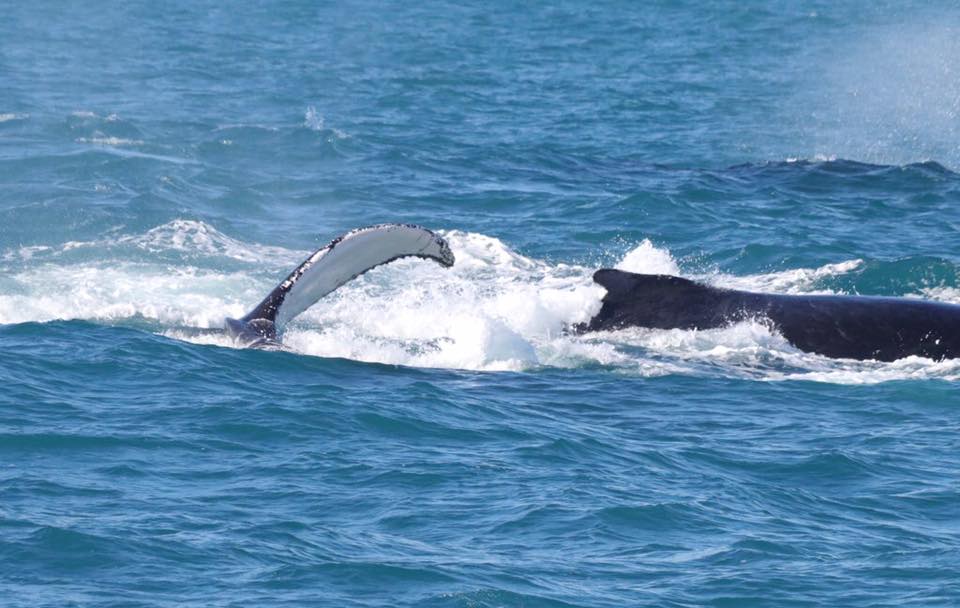
Then there are the pectoral fins, or “pec fins.” On humpbacks, these fins are exceptionally long—up to one-third of their body length. Used for steering, communication, and even social play, pectoral fins are often seen during a side-roll or gentle wave at the surface.

The Blowhole and Breathing

One of the most iconic whale parts is the blowhole, located on top of the whale’s head. This is not a nostril—it is their only airway. Whales are mammals, so they must surface to breathe. When they exhale, the warm air from their lungs meets the cooler ocean air, creating the famous misty “blow.”

Humpback whales have a single blowhole, while larger whales like the blue whale have two. Blow shapes and patterns can help experienced guides identify different species from afar. Watching a whale surface and blow is often the first sign of a sighting. It is also a chance to observe the whale’s behaviour—calm breathing means cruising, while shorter intervals could mean diving.

Breaching and Surface Displays

If you are lucky, you might witness a breach—a dramatic leap from the water. No one knows exactly why whales breach. It could be to dislodge parasites, communicate, or simply for play. Regardless, it is always an unforgettable moment.

Whales also perform tail slaps, head lunges, and spy hops. Each movement reveals different whale parts in action. For example, a tail slap involves the fluke slamming down on the water’s surface. It creates a loud splash that can be heard from the vessel.

Spy hopping is when a whale rises vertically, poking its head above the surface to look around. This allows a rare glimpse of the whale’s eyes and head ridges—features not always visible during typical surfacing.

Southern Right Whale Features

Augusta is home to southern right whales, which differ noticeably from humpbacks. Their most defining whale part is the callosity pattern on their heads. These rough, white patches are hardened skin covered with barnacles and whale lice. Each whale has a distinct pattern, allowing researchers to track and identify individuals.

Southern right whales lack a dorsal fin, and their pectoral fins are shorter and paddle-shaped. They are more likely to remain near shore, offering great viewing opportunities. Their blows are V-shaped due to the two blowholes positioned wide apart—another distinctive feature you can spot easily.

Mothers, Calves and Whale Parts

During Augusta’s whale season, many females arrive with calves. Watching a mother and calf humpback interact is a heartwarming highlight. Whale calves rely heavily on their mothers, nursing several times a day.

The calf’s small fluke and short pectoral fins show how these whale parts develop over time. Mothers often guide their young by nudging them gently with their fins. You will notice the calf stays close, usually riding in the mother’s slipstream to conserve energy.

Mothers are highly protective. They may position themselves between the calf and the boat or perform defensive slaps if they feel threatened. This behaviour is why respectful, low-impact whale watching is so important.

How Whale Parts Help Science

Understanding whale parts is not just fascinating—it also helps science. Researchers track migration, behaviour, and health using physical features. For example, changes in the condition of the fluke may indicate an injury or past entanglement in fishing gear.

Some scientists use drones to photograph whale parts from above, allowing close monitoring without interference. Others collect skin and blubber samples to analyse genetics, diet, or pollutant exposure.

Whale parts also inspire technology. Engineers study the ridges on humpback pectoral fins to design more efficient wind turbines and aircraft wings. Nature, it seems, still holds many answers.

Join a Legend Charters Tour

When you join a Legend Charters whale watching tour in Augusta, you are not just sightseeing—you are learning. Our expert crew includes marine naturalists who will explain everything you are seeing, from blowholes to barnacles. You will leave with a deeper understanding of whale parts and the vital roles they play.

Each tour is tailored to ensure minimal disturbance and maximum enjoyment. With small group sizes and spacious viewing decks, every guest has a front-row seat to the action. Whether you are a first-time visitor or a seasoned wildlife lover, Augusta will capture your heart.

Book your whale watching tour today with Legend Charters. Discover the stories behind every splash and every surface—because every whale part has a purpose.

There are no longer fishing charters in the south west of WA

The Demise of Fishing Charters in the South West

No More Fishing Charters


Legend Charters has been operating fishing charters from Busselton and Dunsborough since 2010.

In 2023 the Department of Primary Industries and Regional Development brought new legislation into WA to protect demersal fisheries in the various regions.

Tags which were distributed to the various tour operators were limited and this meant it was no longer viable for tour operators to continue offering fishing charters to guests in the south west region.

https://www.abc.net.au/news/2024-02-14/wa-fishing-council-slams-move-to-increase-demersal-catch-limits/103465264

Naturaliste Charters catamaran the Alison Maree
Experience Whale Watching charters from the purpose built Alison Maree

Whale Watching Charters Grow


Before Legend Charters ceased operating fishing charters they opened up whale watching tours from Dunsborough, Augusta and Busselton towns.

This has become very popular, not just with visitors to the region but with locals.

Legend Charters took on a larger 23 metre catamaran and had it renovated to suit the ocean conditions in Bremer Bay, commencing killer whale tours from the harbour.

This catamaran is the Alison Maree and the business has grown and is operating under the Naturaliste Charters banner, with their home office located in Dunsborough.

Naturaliste Charters now operates whale watching tours in Augusta and Dunsborough from May until November each year and killer whale tours from Bremer Bay from December to April each year.

This means they now operate all year around!

Book an Augusta Whale Watching Tour May-August

Book a Dunsborough Whale Watching Tour August-November

Busselton Whale Watching Tours now leave from Dunsborough

Humpback Whale breach Dunsborough WA
Humpback Whale breaching. Dunsborough whale watching season.

What Can you See During the Various Seasons


Therefore, whilst we may not be able to offer you a fishing charter, we can still take you out onto the ocean to view the variety of whales and cetaceous species that inhabit the waters off the Western Australian coast.

Bremer Bay: Season December until April – Varieties seen include Killer Whales, Dolphins, Pilot Whales, Giant Squid, Pelagic Bird species, Sea Lions, Sharks, Sperm Whale, Sunfish this is not limited to these species however.

Augusta: Season May until August – Varieties seen include Humpback Whales, Southern Right Whales, Dolphins, Pelagic Birds, Sharks this is not limited to these species however.

Dunsborough/ Busselton: Season May until November – Varieties seen include primarily Humpback Whales, Southern Right Whales, Blue Whales, Dolphins, Sharks and Pelagic Birds but this is not all that we may see from this location.

Book one of our bucket list tours here – https://legendcharters.net.au/book/

Killer Whale Season Bremer Bay

Whale Watching Augusta July 24 2018

Whale Watching Augusta – Tuesday 24th July 2018

As we cruised out this morning a competition pod was sighted immediately as we left the marina. Some good action between competing males, pec slapping and tail slapping, creating quite a stir in the water. We came across two more pods during the tour, and a lovely Southern Right whale and calf just off the beach.

Naturaliste Charters

 by crew member Mark Jackman

Humpback whale breaching

Whale Watching Augusta – Friday 13th July

You know you’ve had a fantastic day when your able to see 3 different species of cetaceans on one tour! Just this morning we saw over 20 Humpbacks, 3 Southern Rights (including a mother and a calf) as well as a pod of dolphins! The dolphins didn’t want to leave the whales alone weaving in and out of the first pod of spotted Humpbacks stealing our attention between each surface!

The sheer amount of blows lit up the bay leading us to our first competition pod for the day instantly. The group of 6 appeared to be charging through the bay surging from the east and creating their own bow waves by displacing 45 tonnes of water with each stroke. The pod of dolphins then appeared beside the whales ducking in and out of the narrow gaps between them.

The Southern Right whales (SRW) were found tucked into the corner where mum and bub were resting before making their journey further up the bay to the more protected waters of the reef. SRW’s that calve in Flinders bay do so very close to the shoreline in the corner of the bay before travelling out and resting in the reef. They’ll remain beside the reef for the duration of the season occasionally venturing out deeper into the bay to slowly introduce the calf to the conditions of the open ocean. The SRW calf, approximately a week old now would have been lifted on its mothers back for the first few days of its life to I inflate its lungs and teach It to breath. Now breathing on its own the week old calf is full of energy and playfully interacting with its mother, rolling in the shallows and creating its own little splash!

Until tomorrow

Naturaliste Charters

📹 by Marine Biologist Bianca Uyen

Whale Watching Augusta - Tuesday 1 July 2018

Whale Watching Augusta – Sunday 1st July

We saw the shallowest travelling group of Humpbacks today in the morning tour exiting the marina and spotting the pod in the western nook of the bay. We headed over to them and followed behind as they made their way through the bay hugging the coastline, travelling in less than 5m of water. They were so close to shore that cars were stopping down the coastal Augusta drive towards the Cape Leeuwin lighthouse to get a photo! The competition pod of 6 narrowly avoided the marina turning towards us in the bay and slow passing our stern before they headed for the passage, our passengers just as shocked as the crew to see them so close to shore!

The afternoon topped it again hearing “Breaching whales!” called out by the skipper as we made our way out for the second tour of the day. The breaching duo was sighted on the horizon just over a mile from the harbour. They were close enough that we were able to motor out there and watch them breach at least 4 times up close. Throwing barrels in the air the whales used the momentum of their pec fins to perform 360-degree rolls in the air Impressing all those on board!!

Until tomorrow

Naturaliste Charters

📷 by Marine Biologist Bianca Uyen